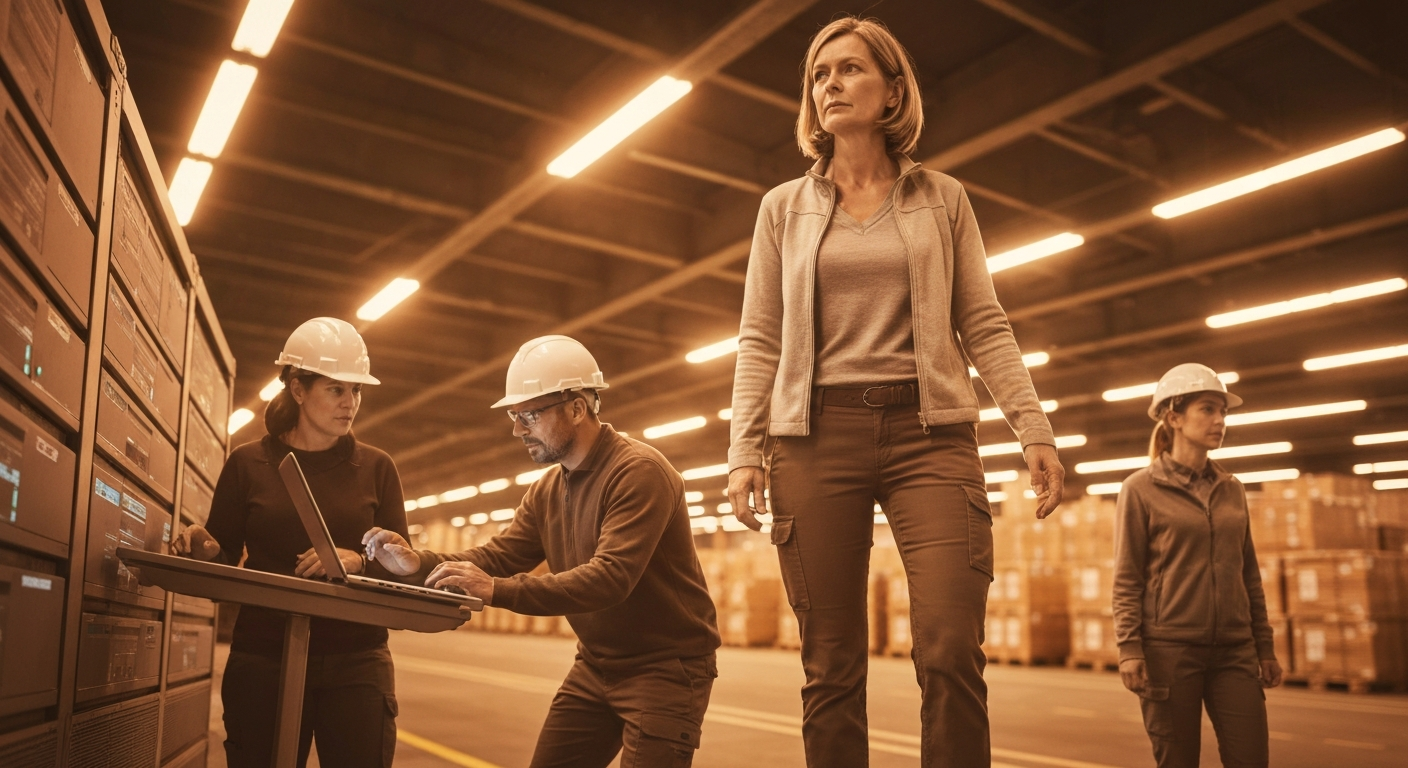
Logistics will be the first industry where AI manages physical assets at scale, transforming the sector from a series of managed transactions into a predictive, self-optimizing network by 2030. Today's supply chains are a complex orchestration of disparate systems, human decisions, and often reactive problem-solving. Over the next seven years, the strategic application of custom software and AI will shift this paradigm, moving from fragmented visibility to holistic, anticipatory control. This isn't about replacing human roles entirely, but rather augmenting them with intelligence that eliminates inefficiencies, anticipates disruptions, and ultimately redefines the economic models of moving goods. The companies that embrace this transformation will gain insurmountable competitive advantages, while those that don't will struggle to maintain solvency in a margin-thin environment.
Three Near-Certain Shifts
Autonomous Operations Expand Beyond the Last Mile
By 2030, autonomous vehicles (AVs) and drones will be integral to middle-mile and intra-facility logistics, not just niche last-mile deliveries. Evidence points to rapid advancements in sensor fusion, AI decision-making, and regulatory frameworks. Waymo Via, for example, is already testing fully autonomous Class 8 trucks in Texas, operating without safety drivers in certain capacities. Similarly, warehouse robotics companies like Boston Dynamics and Locus Robotics are deploying solutions that independently move goods within distribution centers, handling tasks from picking to sorting. The implication is a significant reduction in labor costs, particularly for repetitive routes and tasks, and a simultaneous increase in operational hours. Fleets will operate 24/7 without driver hour restrictions, improving asset utilization from the current average of 40-50% to over 80% for long-haul routes. This will drive down per-mile costs and alleviate chronic driver shortages, especially in remote or less desirable routes.

Predictive AI Becomes the Central Nervous System of Supply Chains
Logistics operations will transition from reactive problem-solving to proactive, AI-driven prediction and optimization across all major nodes. Today's best-in-class Transportation Management Systems (TMS) and Warehouse Management Systems (WMS) offer real-time visibility. By 2030, these systems will be integrated with predictive AI models that analyze historical data, real-time IoT feeds (weather, traffic, vehicle diagnostics), economic indicators, and even geopolitical events to forecast demand, anticipate disruptions, and recommend optimal actions. For example, an AI system might predict a critical component shortage for a manufacturing client based on port congestion data and current geopolitical tensions, then automatically re-route incoming shipments or suggest alternative suppliers weeks in advance. Companies like Maersk are already investing heavily in AI for demand forecasting and container optimization, demonstrating a clear path towards this future. The implication is a drastic reduction in stockouts, demurrage fees, wasted capacity, and expedited shipping costs, translating to margin improvements of 5-10% for large-scale operations.
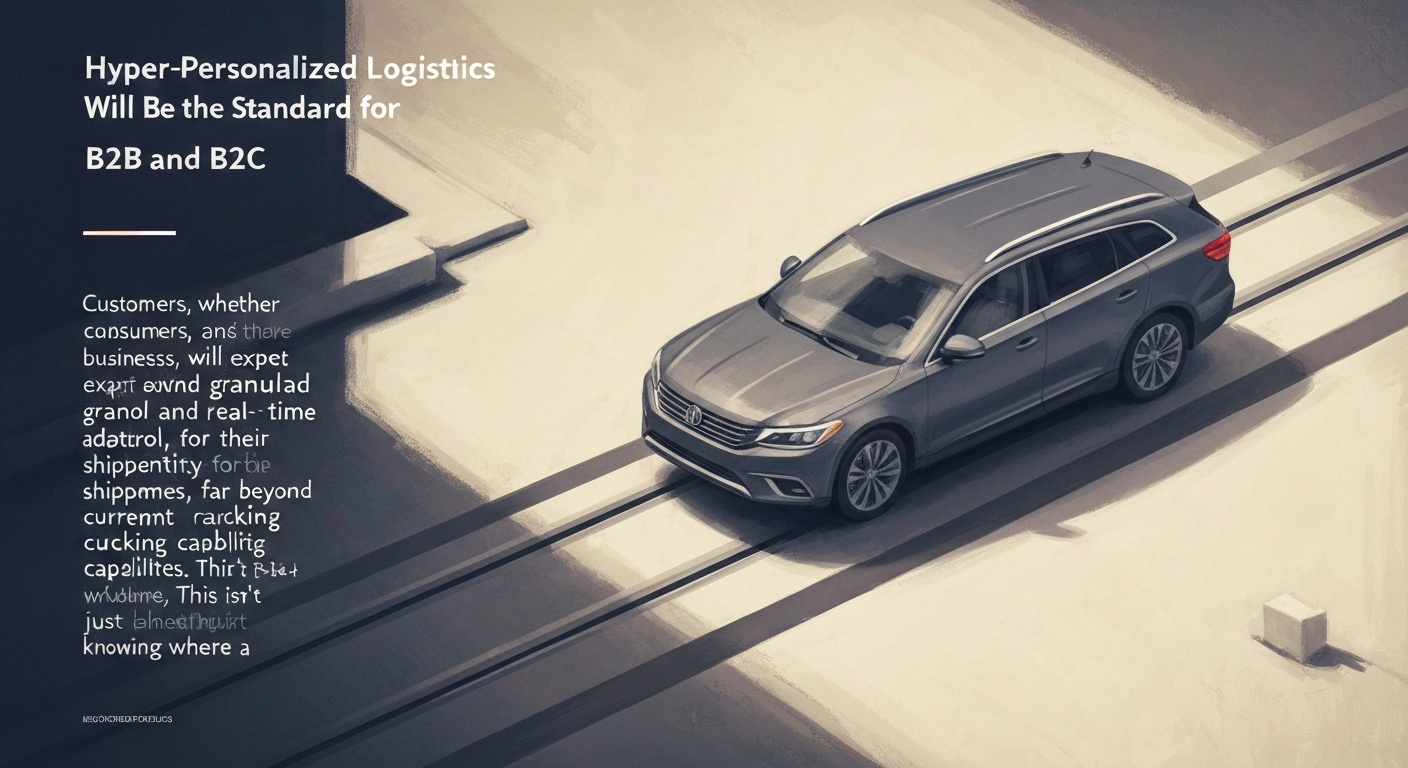
Hyper-Personalized Logistics Will Be the Standard for B2B and B2C
Customers, whether consumers or businesses, will expect granular control and real-time adaptability for their shipments, far beyond current tracking capabilities. This isn't just about knowing where a package is; it's about being able to dynamically change delivery windows, re-route mid-transit, or even combine orders to optimize for carbon footprint, all through intuitive digital interfaces. The proliferation of APIs and microservices will enable seamless integration between shipper, carrier, and customer platforms. Consider a scenario where a B2B client needs to adjust the delivery time of a critical part by two hours due to an unexpected production line issue. An AI-powered TMS, integrated with their ERP, could automatically assess carrier capacity, driver availability, and potential route impacts, then confirm the change and recalculate costs in seconds. Companies like Amazon have set the precedent for consumer expectations, and these demands are now migrating to the B2B space. The implication is a higher customer satisfaction rate, reduced last-mile delivery failures, and the ability to offer premium, differentiated services that command higher margins.
Two Wild Cards
Quantum Computing's Niche Impact on Optimization
While general-purpose quantum computers are unlikely to be widespread by 2030, specialized quantum annealing solutions or hybrid classical-quantum approaches could provide breakthrough optimizations for extremely complex logistics problems. These problems, like the Traveling Salesperson Problem (TSP) with thousands of variables, currently strain even supercomputers. A quantum solution could, in theory, achieve optimal route planning across vast, dynamic networks in near real-time, far surpassing current heuristic-based approximations. Evidence includes advancements from D-Wave Systems in quantum annealing, which has shown promise for specific optimization challenges. The implication, if realized, would be an unprecedented level of efficiency in network design, dynamic routing, and resource allocation. Imagine a global freight network that can instantly re-optimize every single container movement and vehicle route based on a sudden, major disruption like a canal blockage or a port strike. This would unlock efficiencies previously considered mathematically impossible, but the timeline and broad applicability remain uncertain.
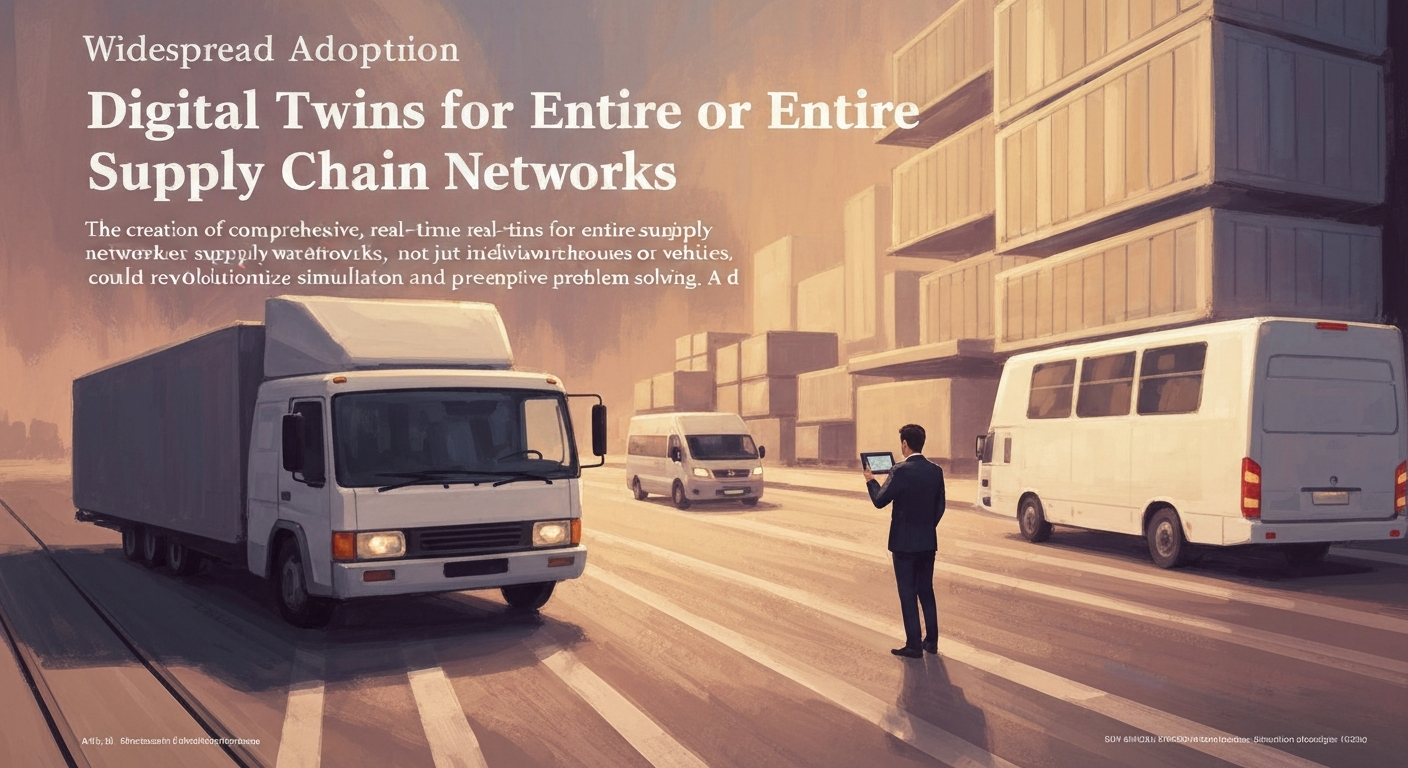
Widespread Adoption of Digital Twins for Entire Supply Chain Networks
The creation of comprehensive, real-time digital twins for entire supply chain networks, not just individual warehouses or vehicles, could revolutionize simulation and pre-emptive problem solving. A digital twin would be a virtual replica of the physical supply chain, fed by live data from every sensor, system, and human input. This would allow for high-fidelity simulations of disruptions, policy changes, or demand spikes before they occur physically. Imagine modeling the impact of a new trade tariff on lead times, costs, and inventory levels across an entire global network in minutes, or stress-testing a new distribution center layout virtually. Companies like Siemens are already pushing digital twin technology in manufacturing, but extending this to a full, multi-party logistics network presents significant data integration and standardization challenges. If successful, it would enable unprecedented levels of resilience and strategic planning, potentially reducing operational risks by 15-20% and accelerating strategic decision-making cycles from months to days.
What Stays the Same
Despite the radical technological shifts, the fundamental goal of logistics remains unchanged: to move goods from point A to point B efficiently, reliably, and cost-effectively. Human oversight, strategic decision-making, and relationship management will still be critical, even as AI handles more operational tasks. The need for robust physical infrastructure—roads, ports, warehouses—will persist. Trust, regulatory compliance, and the inherent variability of real-world events will continue to demand human intervention and adaptability. Technology will elevate the capacity and speed of operations, but the underlying principles of supply and demand, and the imperative to deliver on promises, will endure.
What This Means for Logistics Leaders This Year
- Audit Current Data Infrastructure: Assess your organization's ability to collect, standardize, and integrate data from disparate sources (TMS, WMS, ERP, IoT devices). Future AI initiatives are entirely dependent on clean, accessible data. Identify gaps and prioritize investment in data pipelines and warehousing.
- Invest in AI-Readiness Training: Begin upskilling your workforce in data literacy, AI interaction, and change management. The shift to AI-driven operations requires a workforce capable of interpreting AI outputs, validating recommendations, and managing exceptions, rather than just executing manual tasks.
- Pilot Predictive Analytics Projects: Start with specific, high-value use cases for predictive AI, such as demand forecasting for a single product line, predictive maintenance for a subset of your fleet, or dynamic route optimization for a specific region. Learn fast and scale iteratively.
- Form Strategic Tech Partnerships: Identify digital agencies or software development partners with proven expertise in custom logistics software, AI, and integration. Avoid off-the-shelf solutions that promise everything but deliver generic functionality. Your competitive advantage will come from bespoke solutions tailored to your unique operational complexities.
- Develop a 3-Year AI Strategy Roadmap: Articulate a clear vision for how AI will transform your core logistics processes, outlining key milestones, necessary technology investments, and anticipated ROI. This roadmap should be integrated with your overall business strategy and regularly reviewed.