The logistics sector is currently navigating a period of significant transformation. Geopolitical shifts, persistent labor shortages, and evolving consumer expectations continue to put pressure on traditional operating models. Companies are facing a dual challenge: maintaining efficiency in the face of rising costs while simultaneously investing in technologies that promise long-term resilience and competitive advantage. The focus has sharpened on optimizing every segment of the supply chain, from first-mile pickup to last-mile delivery.
Digital maturity varies widely across the industry. While some enterprises have adopted advanced analytics and automation for years, many mid-market players are still grappling with integrating disparate legacy systems or moving beyond manual processes. The imperative to build robust, adaptable systems is no longer a luxury; it is a fundamental requirement for staying profitable and responsive in a global market that demands speed and transparency.
Five Trends Shaping Logistics in 2026
AI-Powered Predictive Analytics for Demand and Capacity Planning
Leveraging AI to forecast demand and optimize resource allocation with greater accuracy.

The adoption of AI in predictive analytics is moving beyond simple statistical models to incorporate sophisticated machine learning algorithms. Companies are integrating historical data with real-time inputs like weather patterns, social media trends, and geopolitical events to generate more precise demand forecasts. This allows for proactive adjustments in inventory levels, warehouse staffing, and fleet deployment. For example, a major CPG distributor recently reported a 15% reduction in stockouts by using a custom AI model built on TensorFlow to predict regional demand fluctuations two weeks in advance, incorporating local event calendars and public holiday schedules.
This enhanced foresight directly impacts operational efficiency and cost control. Better demand predictions reduce the need for expedited shipping, minimize spoilage in perishable goods logistics, and optimize warehouse space utilization. On the capacity planning side, AI models are now dynamically adjusting driver schedules and equipment allocation, accounting for variables like road closures, port congestion, and even individual driver availability and hours-of-service regulations. This not only improves on-time delivery rates but also helps manage fuel costs and reduce empty miles, contributing to better margins.
What to do this quarter: Evaluate your current data infrastructure and identify key data sources for demand and capacity (e.g., historical sales, IoT sensor data, carrier performance). Begin a pilot project with a data science partner to develop an initial AI model for a specific product line or geographic region using tools like Python's scikit-learn or AWS SageMaker. Focus on clear, measurable KPIs like forecast accuracy or reduction in expedited shipping costs.
Hyper-Personalized Last-Mile Delivery
Meeting evolving consumer expectations for speed, flexibility, and transparency in final delivery.
Consumer demand for flexible and transparent last-mile options continues to escalate. This goes beyond simply offering same-day or next-day delivery; it now includes specific time windows, real-time tracking with dynamic ETAs, and the ability to redirect packages mid-transit. Technologies like dynamic routing algorithms, often powered by platforms like OptimoRoute or Route4Me, are becoming standard, enabling carriers to optimize routes in real-time based on traffic, new orders, and customer preferences. This is further augmented by customer-facing portals that provide minute-by-minute updates and direct communication channels with drivers.
This trend is also driving investment in diverse delivery methods. While traditional vans remain primary, urban centers are seeing increased adoption of cargo bikes, electric vehicles, and even autonomous delivery robots for short-haul, high-density routes. Regulatory bodies in cities like Seattle and Paris are actively developing frameworks for these new modalities, often prioritizing sustainable options. For instance, Amazon is expanding its fleet of Rivian electric delivery vans, and specialized last-mile providers are investing in micro-fulfillment centers in dense urban areas to reduce travel distances and improve delivery speed.
What to do this quarter: Conduct a thorough analysis of your current last-mile capabilities against competitor offerings and evolving customer expectations. Explore integrating real-time tracking solutions and customer communication platforms into your existing TMS. Pilot a specific alternative delivery method, such as e-cargo bikes in a dense urban market, and measure its impact on delivery speed, cost, and customer satisfaction.
Supply Chain Digital Twins
Creating virtual models of physical supply chains for simulation and optimization.

Digital twins are gaining traction as a powerful tool for simulating complex supply chain scenarios before making real-world changes. These sophisticated virtual models integrate real-time data from IoT sensors, ERP systems, and TMS platforms to create a dynamic, accurate representation of the entire supply network. Companies are using platforms like Siemens' Supply Chain Digital Twin or Dassault Systèmes' DELMIA to model everything from warehouse layouts and inventory flows to global shipping routes and manufacturing processes. This allows for risk assessment, "what-if" scenario planning, and proactive problem-solving.
The primary benefit is the ability to test the impact of operational changes, market disruptions, or strategic investments without incurring actual costs or risking service interruptions. For instance, a logistics provider might simulate the impact of a new distribution center location on delivery times and fuel consumption, or model the effect of a port closure on lead times and inventory levels. This level of insight enables data-driven decision-making, leading to optimized resource allocation, improved resilience against disruptions, and better long-term strategic planning.
What to do this quarter: Identify a specific, complex supply chain challenge within your organization (e.g., optimizing a major distribution network or mitigating a recurring bottleneck). Research digital twin platforms and consult with providers to understand their capabilities. Begin by mapping out the data flows required to build a basic digital twin for this specific challenge, focusing on integration points between your existing systems.
Regulatory Pressures and ESG Compliance
Navigating increasingly stringent environmental, social, and governance requirements.
ESG (Environmental, Social, and Governance) factors are no longer peripheral concerns; they are becoming central to logistics operations and investment decisions. Regulations are tightening globally, with mandates like the EU's Corporate Sustainability Reporting Directive (CSRD) requiring detailed disclosure on environmental impact, including Scope 3 emissions from transportation. This pushes companies to accurately track and report carbon footprints, waste generation, and labor practices across their entire supply chain, driving demand for specialized reporting and analytics tools.
Beyond compliance, ESG performance is increasingly influencing customer choice and access to capital. Consumers are more likely to choose brands with demonstrable sustainability efforts, and investors are factoring ESG scores into their due diligence. This translates into a push for cleaner fleets (electric vehicles, alternative fuels), optimized routing to reduce fuel consumption, and ethical sourcing practices. Companies are investing in custom software to monitor and report on these metrics, ensuring transparency and demonstrating commitment to sustainable operations.
What to do this quarter: Conduct an internal audit of your current ESG reporting capabilities and identify gaps against emerging regulations (e.g., CSRD, local emissions standards). Prioritize an initiative to reduce your carbon footprint, such as optimizing fleet routing for fuel efficiency or exploring electric vehicle pilots. Begin integrating sustainability metrics into your operational dashboards and consider a pilot for a carbon accounting software solution.
Advanced Robotics and Warehouse Automation
Automating repetitive tasks in warehouses to combat labor shortages and boost throughput.
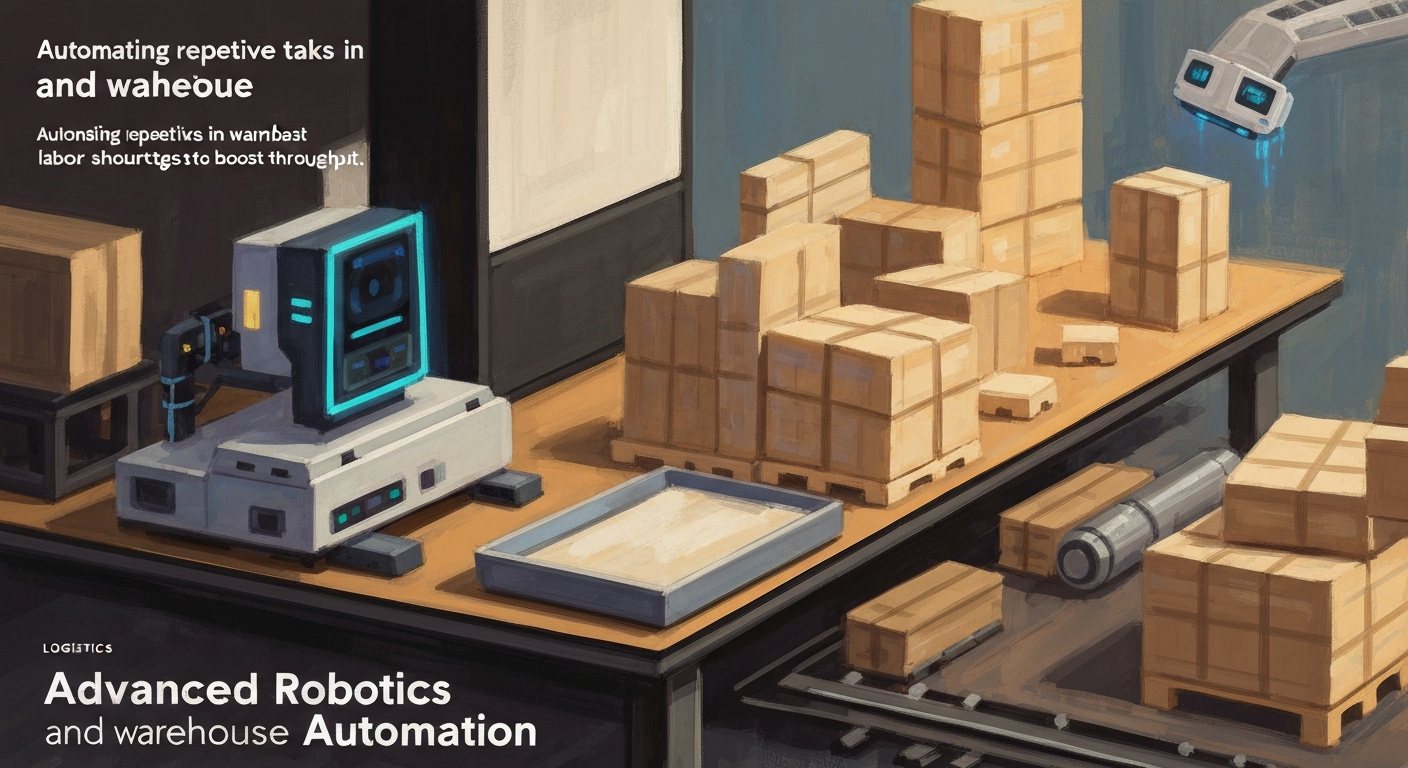
Labor shortages in warehousing and distribution centers remain a persistent challenge, driving significant investment in automation. The focus is shifting beyond basic conveyor systems to more sophisticated robotics, including autonomous mobile robots (AMRs) for material handling, robotic picking arms for order fulfillment, and automated storage and retrieval systems (AS/RS). Vendors like Locus Robotics and KUKA are deploying flexible, scalable solutions that can integrate seamlessly with existing warehouse management systems (WMS).
This wave of automation aims to increase throughput, reduce errors, and improve safety while addressing the scarcity of human labor. AMRs, for example, can navigate complex warehouse environments, transporting goods to picking stations or directly to shipping docks, freeing human workers for more complex tasks. The integration of these robots with custom WMS solutions allows for dynamic task assignment and real-time inventory tracking, significantly enhancing operational efficiency and speed, particularly for e-commerce fulfillment.
What to do this quarter: Assess your current warehouse operations to identify labor-intensive, repetitive tasks that could be automated (e.g., goods-to-person movement, case picking). Research AMR and robotic picking solutions that can integrate with your existing WMS. Consider a proof-of-concept deployment of a small fleet of AMRs in a specific area of your warehouse to quantify efficiency gains and evaluate integration complexity.
How Hostreck thinks about this
The current landscape in logistics is defined by a clear need for interconnected, data-driven systems. Point solutions can address immediate needs, but true competitive advantage comes from custom software that integrates these trends into a cohesive operational fabric. This means building platforms that can ingest diverse data, apply intelligent algorithms, and provide actionable insights across the entire value chain.