This article describes a composite scenario, drawing from common challenges and solutions we’ve observed across various engagements, rather than a single real client project. Our hypothetical client, "EducateWell," was a mid-sized educational content provider based in the Midwestern US. They specialized in supplemental K-12 curriculum materials, offering a blend of digital workbooks, online courses, and physical learning kits to parents and small private schools.
The Starting Point
EducateWell faced a familiar bottleneck: their existing e-commerce platform was a patchwork of off-the-shelf solutions and custom code, bolted together over a decade. They ran an aging Magento 1 instance for physical product sales, which required manual product updates and frequently crashed under peak loads. Digital course sales were handled through a separate, clunky Moodle LMS with a basic PayPal integration, leading to a fragmented customer experience. Parents often bought a physical workbook, then had to navigate a completely different system to enroll their child in a corresponding online module. Support tickets related to order errors and account discrepancies consumed 30% of their customer service team's time. Conversion rates hovered around 1.8% for physical products and 1.2% for digital courses, well below industry benchmarks for their niche. Their marketing team couldn't easily track customer journeys across both platforms, making campaign optimization a guessing game.
What They Shipped
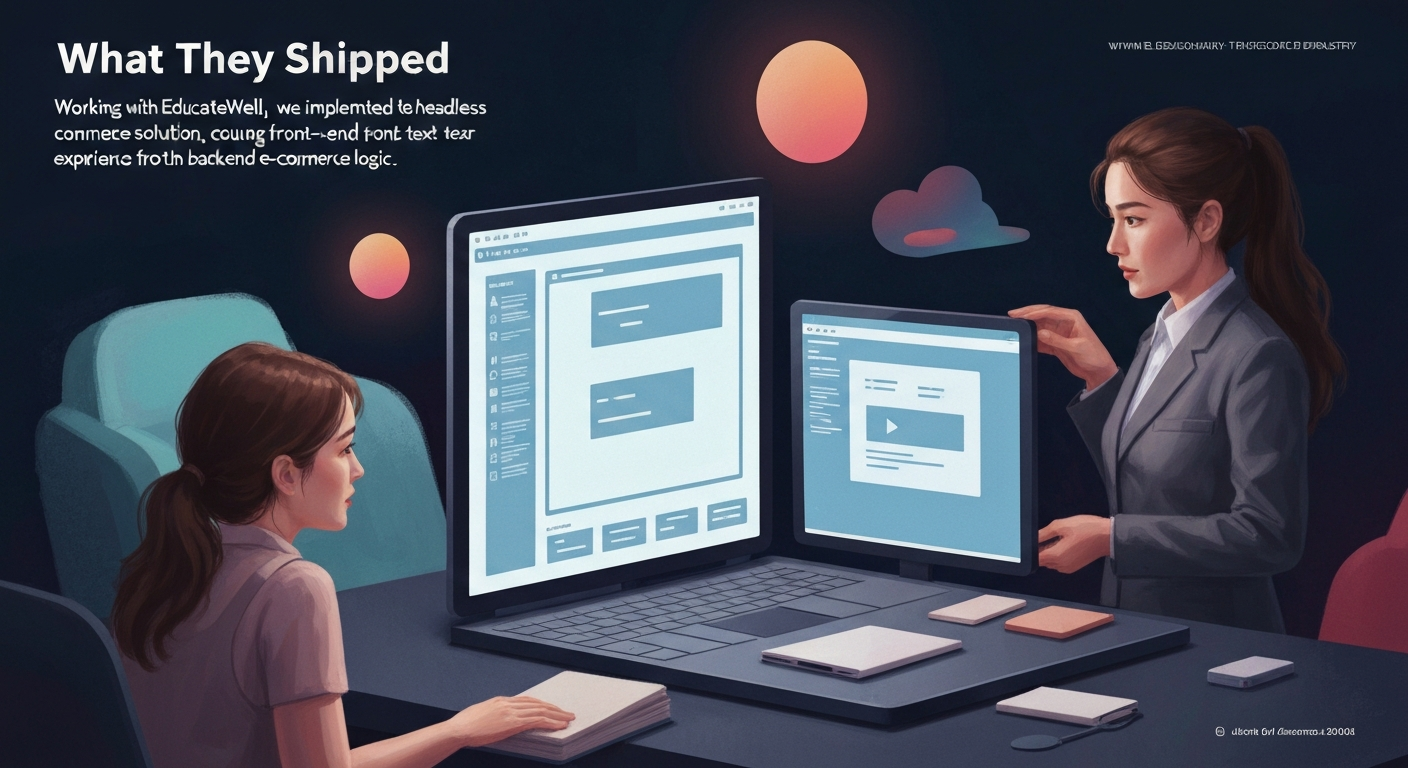
Working with EducateWell, we implemented a unified headless commerce solution, decoupling the front-end user experience from the back-end e-commerce logic.
- Shopify Plus Foundation: We migrated all physical product SKUs and customer data to Shopify Plus, leveraging its robust inventory management, payment gateways, and order fulfillment capabilities. This provided a stable, scalable foundation for their physical goods.
- Custom Frontend with React: We built a custom storefront using React and Next.js, creating a seamless, intuitive user interface that integrated both physical products and digital course offerings. This allowed for a single cart experience and unified checkout flow.
- Headless LMS Integration: We integrated their Moodle LMS as a headless service, using its APIs to manage course enrollments and access. When a customer purchased a digital course through the new Shopify Plus storefront, an API call automatically created their Moodle account and granted course access, eliminating manual intervention.
- Personalized Recommendations Engine: We implemented a recommendation engine using Algolia, cross-referencing past purchases and browsing behavior to suggest complementary physical products for digital courses and vice-versa, displayed directly on product pages and in the cart.
- Subscription Model for Curriculum Packs: We introduced a subscription feature via ReCharge Payments, allowing parents to subscribe to monthly or quarterly curriculum packs, significantly improving customer lifetime value projections.
The Numbers, 6 Months In
The unified platform went live in September 2023, just ahead of the back-to-school rush. Six months later, EducateWell reported significant improvements:

- Conversion Rate: The overall conversion rate across both physical and digital products increased from an average of 1.5% to 3.1%, representing a 106% improvement.
- Average Order Value (AOV): With the personalized recommendations and unified cart, AOV rose by 28%, from $72 to $92, as customers more frequently purchased complementary items.
- Customer Service Load: Support tickets related to order and account issues dropped by 45%, freeing up their customer service team to focus on educational support rather than technical troubleshooting.
- Operational Efficiency: Time spent on manual product updates and order reconciliation was reduced by 70%, allowing marketing and content teams to focus on growth initiatives.
What We'd Do Differently
Looking back, two areas stand out where we could have refined our approach for even greater impact. First, while we integrated Moodle effectively, a more extensive initial audit of their Moodle customizations would have streamlined the API integration process further. We encountered some legacy custom fields that required additional mapping, adding a minor delay. Second, we initially underestimated the internal change management required. EducateWell's team was accustomed to two separate workflows. A more robust, formalized training program during development, rather than primarily post-launch, could have accelerated internal adoption and minimized early friction.
Other education providers struggling with fragmented digital storefronts can learn from EducateWell's experience: a unified e-commerce platform isn't just about consolidating systems. It's about simplifying the customer journey, empowering internal teams, and ultimately, making it easier for learners to access the resources they need.