
The traditional lecture hall, a fixture for centuries, will be largely obsolete by 2030, replaced by adaptive, AI-driven learning environments that prioritize personalized engagement and demonstrable skill acquisition over static content delivery. This isn't a speculative leap; it's the inevitable evolution driven by pedagogical shortcomings of current systems, the accelerating pace of technological innovation, and a growing demand from students and employers for education that is both effective and directly applicable. Institutions that fail to adapt will struggle to attract and retain students, falling behind those that embrace a fundamentally different approach to learning.
Three Near-Certain Shifts
AI-Driven Adaptive Learning Will Be The Standard
Prediction: Every major learning platform will integrate sophisticated AI to personalize curricula, assess understanding in real-time, and offer dynamic, adaptive pathways for students. This goes far beyond current "recommendation engines" to genuine, individualized pedagogical agents.
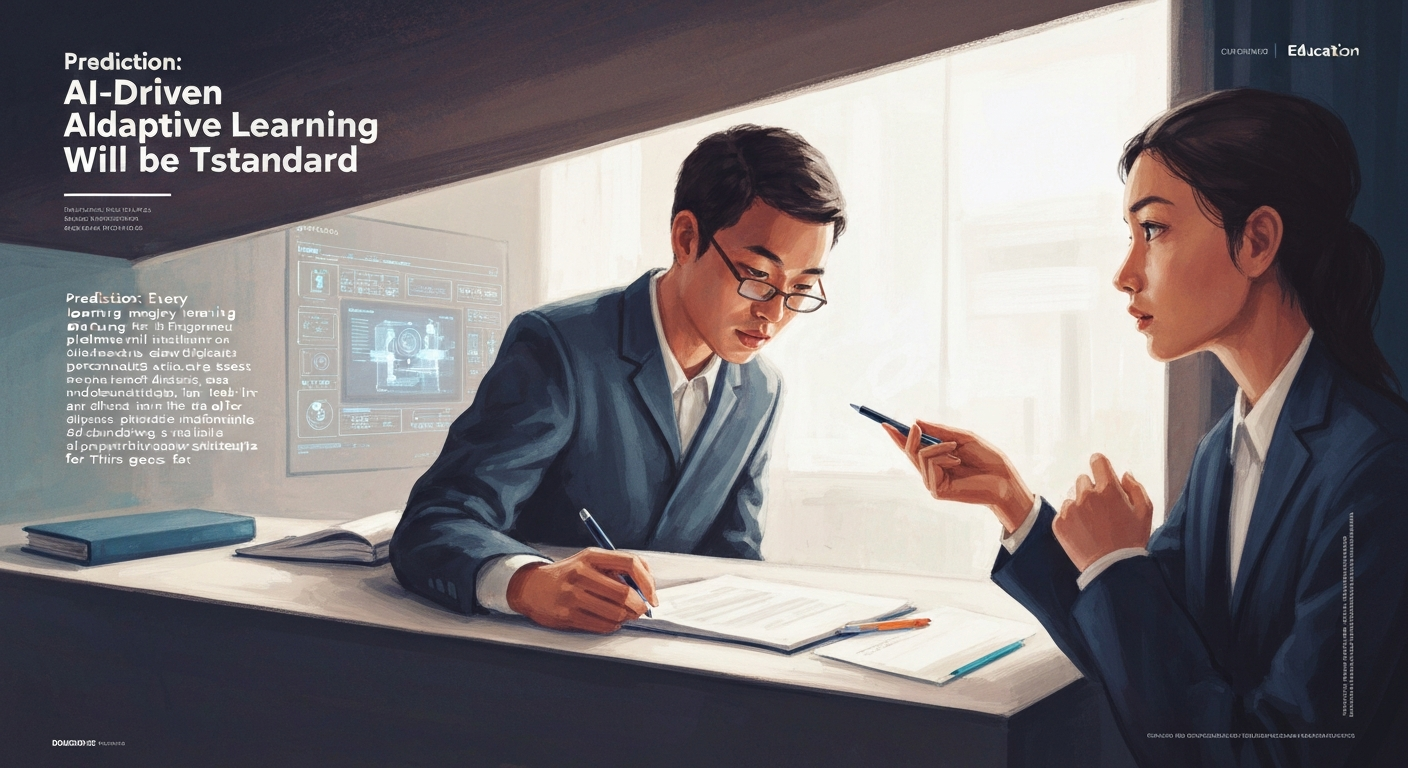
Evidence: The core components are already mature and converging. Large Language Models (LLMs) like GPT-4 and Claude 3 can generate explanations, create practice problems, and provide nuanced feedback at scale. Machine learning algorithms excel at identifying learning patterns, predicting student struggles, and optimizing content delivery. Platforms like Khanmigo and Duolingo already demonstrate AI's capacity for personalized tutoring and content adaptation, albeit in nascent forms. By 2030, these capabilities will be fully integrated into enterprise-grade Learning Management Systems (LMS) and Student Information Systems (SIS). Consider a student struggling with calculus: instead of a generic video, an AI tutor will provide targeted examples based on their specific missteps, offer alternative explanations, and direct them to supplementary materials curated to their learning style, all while flagging potential areas of difficulty for human instructors.
Implication: Educators will shift from content delivery to instructional design, mentorship, and complex problem-solving facilitation. Their role will be to curate AI-generated content, intervene when AI struggles with unique student needs, and foster higher-order thinking skills that AI cannot yet replicate. Institutions will need to invest heavily in robust data infrastructure to feed these AI systems and ensure ethical, unbiased algorithm development. Accessibility standards like WCAG 2.1 AA will be paramount, as these AI systems must serve all learners effectively.
Skill-Based Credentials Will Eclipse Degree-Centric Education for Employability
Prediction: Employers will increasingly prioritize verifiable skill credentials and demonstrable project portfolios over traditional degrees for entry-level and mid-career positions, forcing educational institutions to offer more granular, stackable, and industry-aligned learning pathways.
Evidence: The skills gap is widening, and the shelf-life of specific knowledge is shrinking. Companies like Google and IBM already offer industry-recognized certificates that bypass traditional degree requirements for certain roles. Platforms like Coursera and edX have seen massive growth in professional certificate programs. LinkedIn's "Skills Graph" and similar initiatives demonstrate the market's demand for granular skill identification. By 2030, a "degree" will represent a broad foundation, but specific, verifiable digital badges for "Python proficiency," "Cloud Architecture with AWS," or "Advanced UX/UI Design" will be the currency for employment, often earned through micro-credentials or project-based assessments within larger programs.
Implication: Universities and colleges must fundamentally restructure their offerings. This means breaking down traditional course silos, developing curricula in close collaboration with industry partners, and implementing sophisticated assessment tools that validate specific competencies. Custom student portals will need to evolve to showcase these diverse credentials, integrating with external badging systems and employer verification APIs. The focus will shift from credit hours to competency units, and institutions will compete not just on reputation, but on the direct employability metrics of their graduates, measured by specific skill attainment.
Pervasive Online Proctoring and Biometric Authentication Will Redefine Academic Integrity
Prediction: Automated, AI-powered online proctoring, coupled with biometric identification (e.g., facial recognition, keystroke dynamics), will become the default for high-stakes assessments, making remote exams as secure, if not more secure, than in-person alternatives.
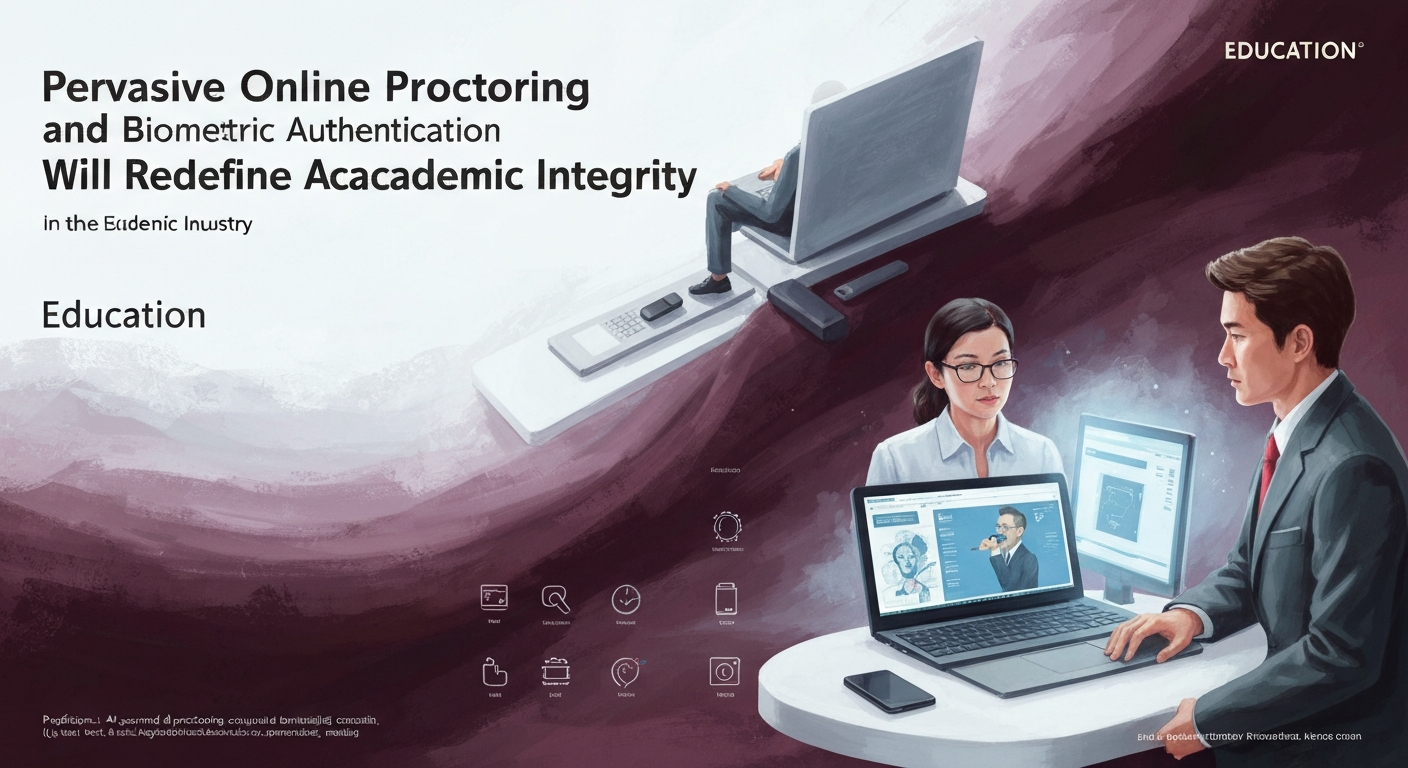
Evidence: The COVID-19 pandemic accelerated the adoption of online proctoring, highlighting both its potential and its current limitations. Companies like ProctorU and Respondus Monitor have significantly advanced their capabilities, using AI to detect suspicious behavior patterns, identify unauthorized materials, and verify student identity. Advancements in computer vision and behavioral biometrics are rapidly improving accuracy and reducing false positives. By 2030, these systems will be integrated directly into LMS platforms, using secure, encrypted channels. Students will routinely use embedded laptop cameras and microphones, with AI analyzing eye movements, background noise, and even typing rhythm to ensure exam integrity.
Implication: Institutions must navigate the ethical implications of pervasive surveillance and data privacy. Clear policies, transparent communication, and robust data security protocols will be essential. Accessibility considerations (e.g., for students with visual impairments or specific physical needs) must be built into these systems from the ground up, adhering to WCAG 2.1 AA. The shift will reduce the logistical burden and cost of physical exam centers, allowing for greater flexibility in scheduling and access to education, particularly for global or remote learners. However, it also demands a renewed focus on designing assessments that are less susceptible to cheating and more focused on critical thinking and application, rather than rote memorization.
Two Wild Cards
The Metaverse as a Primary Learning Environment
Prediction: Immersive virtual reality (VR) and augmented reality (AR) environments, often referred to as the metaverse, could become a primary platform for experiential learning, particularly in fields requiring practical application or complex visualization.
Evidence: Current VR/AR technologies like Meta Quest and Apple Vision Pro offer increasingly sophisticated and accessible hardware. Early adopters are already experimenting with surgical training simulations, historical recreations, and collaborative design reviews in virtual spaces. The potential for "doing" rather than just "watching" is immense. Imagine medical students dissecting virtual cadavers with haptic feedback, engineering students collaborating on a bridge design in a shared 3D space, or history students walking through ancient Rome. This could move beyond niche applications to mainstream adoption if hardware costs decrease and interoperability standards emerge.
Implication: If this takes off, educational institutions will need to invest in the infrastructure and expertise to develop and manage these complex virtual environments. This includes hiring 3D artists, VR/AR developers, and specialists in spatial computing. Custom learning platforms would need to integrate seamlessly with these virtual worlds, managing student identities, tracking progress, and delivering content within the immersive experience. The challenge lies in overcoming hardware barriers, ensuring equitable access, and proving the pedagogical efficacy over less resource-intensive methods. It's plausible but not guaranteed that the ROI will justify the immense investment by 2030.
Universal Basic Education (UBE) Supported by AI
Prediction: Governments or large philanthropic organizations could leverage AI to provide high-quality, personalized education at little to no cost, effectively democratizing access and challenging the traditional university model.
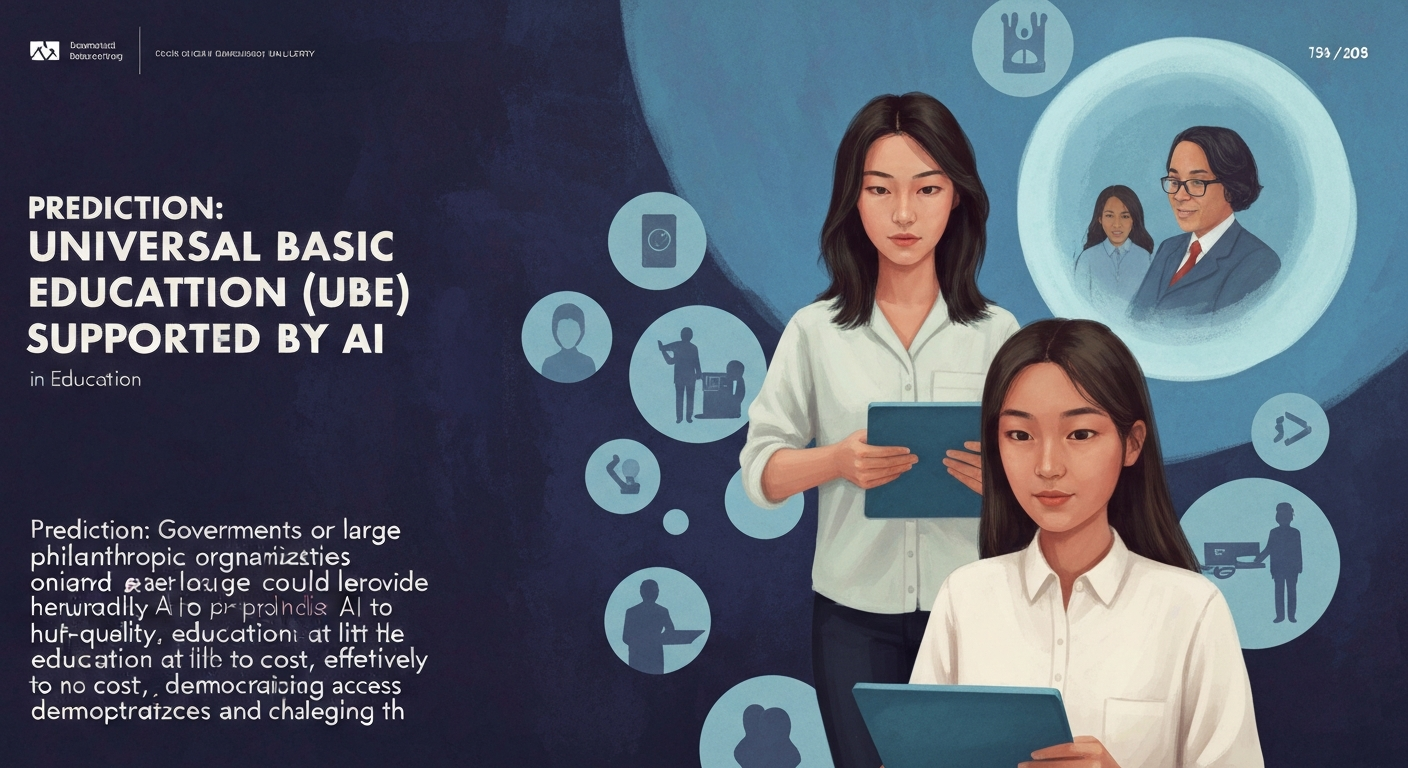
Evidence: The availability of powerful, open-source LLMs and AI development frameworks means that the core technology for personalized tutoring and content generation is becoming increasingly commoditized. Projects like Google's "Learn Anywhere" initiative or similar large-scale philanthropic efforts could envision a future where an AI tutor, accessible via a smartphone, provides a comprehensive, adaptive curriculum for any subject. The current model of education is expensive and often exclusive. If a high-quality AI tutor can deliver 80% of what a human teacher can, at 1% of the cost, the societal pressure to offer this universally will be immense.
Implication: This would be a profound disruption. Traditional institutions would face existential questions about their value proposition. They would need to articulate what human educators provide that AI cannot, focusing on mentorship, community, critical thinking, and the development of soft skills. It could also lead to a bifurcated system: basic education provided by AI, and advanced, specialized, human-led education for those who can afford or qualify for it. The ethical implications of AI-driven universal education, including potential biases in algorithms and the impact on human connection, would also require careful consideration and robust governance.
What Stays The Same
Despite the dramatic shifts in technology and pedagogical approaches, the fundamental human need for connection, mentorship, and the development of critical thinking skills will remain constant. AI can deliver information and personalize learning paths, but it cannot fully replicate the nuanced guidance of an experienced mentor, the collaborative spirit of a diverse peer group, or the ability to navigate complex ethical dilemmas. Educators will continue to play a vital role in fostering creativity, encouraging intellectual curiosity, and developing the emotional intelligence necessary for a complex world. The physical or virtual campus will endure as a hub for community, shared experiences, and the development of interpersonal skills that are increasingly valuable in an automated future.
What This Means for Education Leaders This Year
- Develop a Comprehensive AI Strategy Now: Don't wait. Begin piloting AI tools for content generation, personalized feedback, and administrative tasks. Establish an ethical AI review board and training programs for faculty on how to effectively integrate AI into their teaching and research. Identify where AI can augment rather than replace human effort, focusing on improving learning outcomes and operational efficiency.
- Invest in Robust Data Infrastructure and Analytics: Future AI-driven platforms will demand clean, integrated data from your LMS, SIS, and other systems. Prioritize data governance, security, and the development of analytics capabilities to understand student performance and inform curriculum design. Ensure all data handling complies with privacy regulations and accessibility standards.
- Redefine "Curriculum" Around Skills and Competencies: Begin auditing your programs for alignment with industry-recognized skills. Explore partnerships with employers to co-create micro-credentials and project-based learning experiences. Design your custom learning platforms and student portals to clearly showcase specific skill attainment and digital badges.
- Prioritize Accessibility (AODA / WCAG 2.1 AA) in All Digital Initiatives: As more learning shifts to digital platforms and AI systems, ensuring equitable access for all learners is non-negotiable. Build accessibility into the design phase of every new digital product, from custom LMS features to AI tutor interfaces, rather than treating it as an afterthought.
- Foster a Culture of Continuous Learning and Adaptation: The pace of change will only accelerate. Encourage faculty and staff to experiment with new technologies, share best practices, and embrace a mindset of lifelong learning. Provide professional development opportunities focused on digital pedagogy, AI literacy, and the evolving role of the educator in an adaptive learning environment.