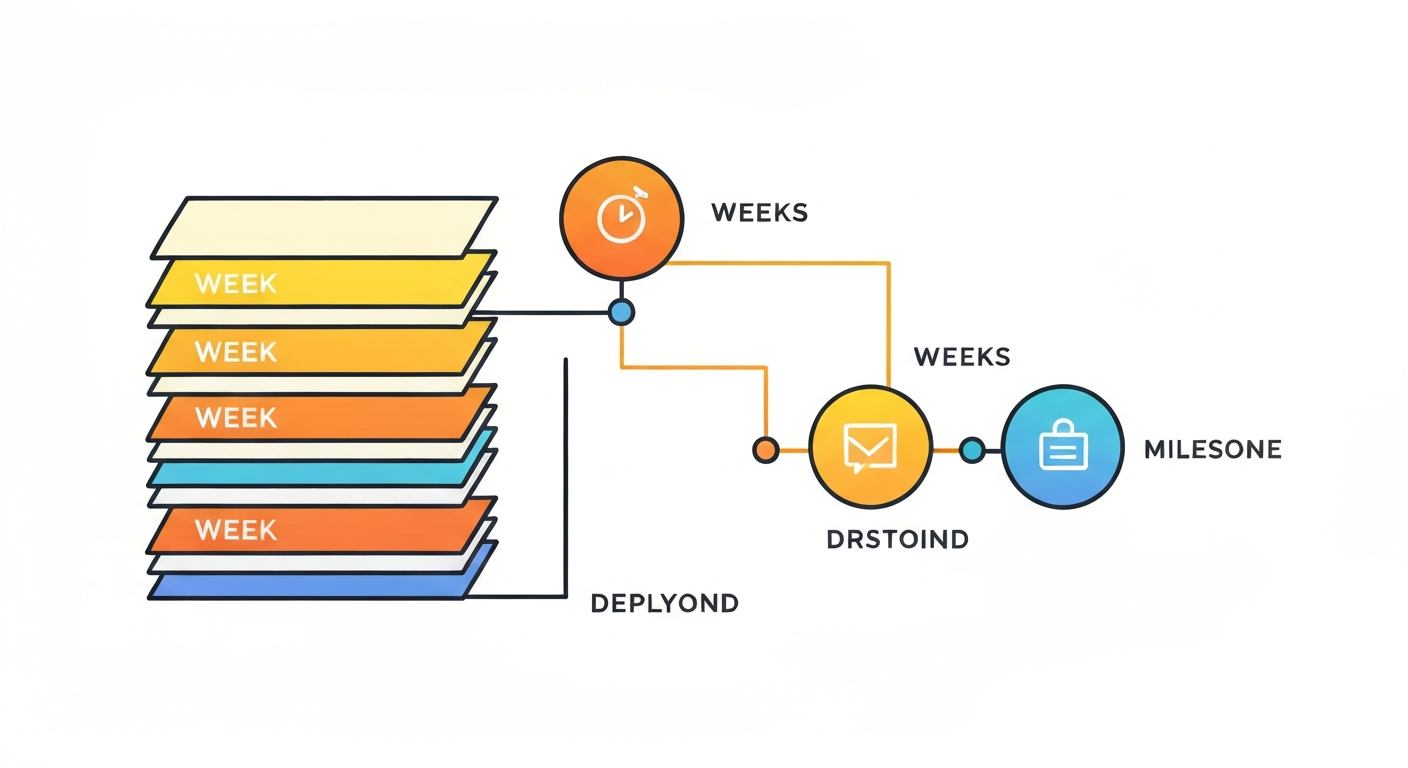
Many engineering managers underestimate the time and resources required to develop a robust product strategy. The prevailing assumption is often that a clear vision already exists, or that strategy is an organic outcome of development. This overlooks the intensive, dedicated effort needed to align stakeholders, validate market assumptions, define technical feasibility, and construct a phased roadmap that minimizes risk and maximizes impact. Without a structured approach, what appears to be a minor pre-development task quickly expands into an open-ended engagement, delaying valuable engineering resources and product launches.
Week 0: Pre-Flight
Before engaging in a 30-day sprint, ensure the following artifacts and conditions are in place. This preparation prevents early roadblocks and ensures the team can hit the ground running.
- Executive Mandate: A clear directive from senior leadership outlining the strategic importance of the product and committing necessary resources (time, budget, personnel). This should explicitly state the business problem being solved.
- Key Stakeholder Identification: A list of all individuals whose input is critical or who will be impacted by the product. This includes representatives from sales, marketing, operations, legal, and executive leadership.
- Initial Problem Statement: A concise, 1-2 sentence description of the core problem the product aims to solve, from the perspective of the target user or business.
- Existing Research & Data: Any prior market research, customer interviews, competitor analysis, or internal performance data relevant to the product concept. This saves time on foundational discovery.
- Technical Landscape Overview: A high-level summary of existing infrastructure, APIs, and technical constraints that might influence product direction. This ensures early technical feasibility checks.
- Dedicated Team Availability: Confirmation that core team members (e.g., product owner, lead engineer, UX designer) can dedicate significant, uninterrupted time to strategy development.
Weeks 1–2: Foundations
These two weeks focus on rapid discovery, validation, and alignment. The goal is to move from a broad problem statement to a validated, high-level solution concept.

- Stakeholder Interviews & Alignment (Days 1-5):
- Conduct 1-hour interviews with each identified key stakeholder. Use a structured questionnaire focusing on their understanding of the problem, desired outcomes, perceived risks, and existing solutions.
- Deliverable: A summary of stakeholder perspectives, highlighting common themes, divergent views, and identified gaps. Use tools like Miro or Mural for collaborative synthesis.
- Outcome: A shared understanding of the problem space and initial alignment on success metrics.
- Market & User Validation (Days 6-10):
- Competitor Analysis: Identify 3-5 direct and indirect competitors. Analyze their features, pricing, value propositions, and customer reviews. Use tools like Similarweb or Crunchbase for data.
- User Research (Light Touch): Conduct 5-7 rapid qualitative interviews with potential end-users. Focus on their pain points related to the problem statement and their current workarounds. Use a screener to ensure target audience fit.
- Deliverable: A competitive matrix and a summary of user pain points and needs, identifying unmet gaps.
- Outcome: Data-backed validation of the problem and early insights into potential differentiation.
- Solution Ideation & Technical Feasibility (Days 11-14):
- Concept Sketching: Facilitate a 2-hour brainstorming session with the core team and selected technical leads. Generate multiple high-level solution concepts for the validated problem. Focus on core functionality.
- Technical Spiking: Have engineering leads conduct rapid technical spikes (e.g., API checks, database feasibility) for the most promising concepts. Identify major technical risks or dependencies.
- Deliverable: 2-3 high-level solution concepts (e.g., user flows, feature lists) with preliminary technical feasibility assessments and identified risks. Use Figma for quick wireframing.
- Outcome: A technically informed, validated core solution concept ready for detailed planning.
Weeks 3–4: Shipping the First Slice
This phase moves from concept to a concrete, shippable plan for the initial product increment.
- MVP Definition & Scope (Days 15-20):
- Feature Prioritization: Based on validated needs and technical feasibility, define the Minimum Viable Product (MVP). Use a prioritization framework like MoSCoW (Must-have, Should-have, Could-have, Won't-have) or RICE (Reach, Impact, Confidence, Effort) to select core features.
- User Story Mapping: Create a high-level user story map to visualize the user journey and break down MVP features into epics and initial user stories.
- Deliverable: A clear MVP definition, including a prioritized feature list and an initial user story map in Jira or Asana.
- Outcome: A well-defined, focused scope for the first product iteration.
- Roadmap & Metrics (Days 21-25):
- Phased Roadmap: Develop a 3-6 month phased roadmap outlining subsequent iterations beyond the MVP. This demonstrates a forward-looking strategy.
- Success Metrics: Define specific, measurable, achievable, relevant, and time-bound (SMART) key performance indicators (KPIs) for the MVP and subsequent phases.
- Deliverable: A 3-6 month product roadmap (e.g., using Productboard or a simple Gantt chart) and a document outlining MVP success metrics (e.g., user adoption, engagement rates, business impact).
- Outcome: A clear path forward with measurable goals.
- Strategy Documentation & Handoff (Days 26-30):
- Strategy Document: Compile all findings, decisions, MVP scope, roadmap, and metrics into a concise Product Strategy Document. This becomes the single source of truth.
- Technical Design Kick-off: Facilitate a meeting with the engineering team to review the MVP scope, architectural considerations, and kick-off detailed technical design.
- Deliverable: A comprehensive Product Strategy Document (e.g., 10-15 pages in Confluence or Google Docs) and a successful handoff meeting with the engineering team.
- Outcome: A ready-to-build MVP, a clear strategic direction, and a motivated engineering team.
Signs You're a 30-Day Project / Signs You're a 90-Day Project
Successfully completing product strategy in 30 days requires specific conditions. Deviations often indicate a longer, 90-day engagement.
Signs You're a 30-Day Project:
- Clear Executive Mandate: Leadership is fully aligned on the problem and committed to funding a solution.
- Accessible Stakeholders: Key decision-makers are available for rapid feedback and interviews.
- Existing User Data: Some form of customer feedback or market research is already available.
- Known Technical Constraints: The general technical landscape and core systems are well-understood.
- Small, Focused Scope: The initial problem statement is narrow and targets a specific pain point.
- Dedicated Core Team: The product owner, lead engineer, and UX designer can prioritize this work.
Signs You're a 90-Day Project:
- Unclear Problem Definition: There's significant disagreement among stakeholders about the core problem or its priority.
- Extensive Stakeholder Alignment Needed: Many disparate departments need to be brought into agreement, requiring multiple iterations of feedback.
- No Prior Research: A fundamental understanding of the market, users, or competitors is missing.
- Complex Technical Discovery: The proposed solution requires significant investigation into new technologies, integrations, or architectural overhauls.
- Broad, Ambitious Scope: The initial vision attempts to solve multiple large problems simultaneously.
- Resource Constraints: The core team is heavily context-switching or lacks dedicated time for strategy work.
- Regulatory or Compliance Hurdles: The product operates in a highly regulated industry requiring extensive legal or compliance review during strategy.
After the initial 30-day sprint and the successful handoff of the Product Strategy Document, maintaining momentum is crucial. Establish a rhythm of weekly product reviews with the engineering team to address questions, clarify requirements, and ensure the build stays aligned with the strategic vision. Regularly communicate progress and learnings to stakeholders, demonstrating the tangible outcomes of the strategy work. Finally, set up a feedback loop for the MVP post-launch to continuously validate assumptions and iterate on the product based on real-world user data and business impact.